
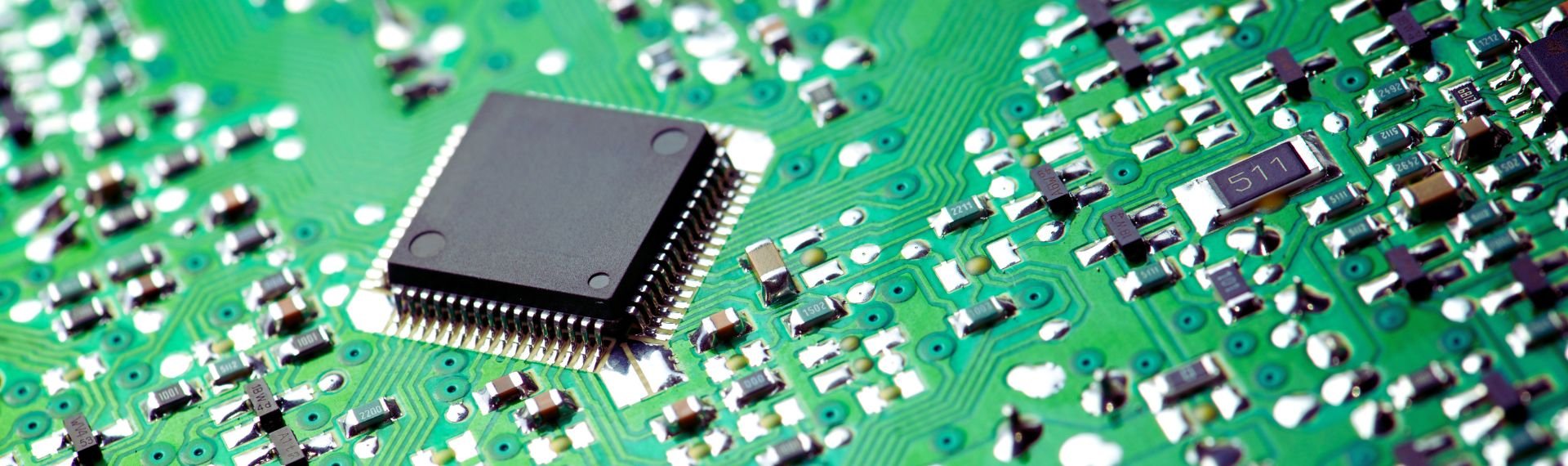
The slowdown in semiconductor scaling is driving research toward alternative computing platforms capable of supporting the explosive growth of artificial intelligence with lower energy consumption. In this context, analogue optical computing is emerging as a revolutionary solution: by using photons instead of electrons, optical processors offer extremely wide bandwidth and ultra-low latency, ensuring levels of speed and scalability that are difficult to achieve with traditional electronics.
Despite the enormous potential of integrated photonics, the reliable use of optical processors requires overcoming critical challenges related to their configuration. Traditional approaches in fact rely on complex calibration procedures, which are sensitive to environmental operating conditions and to the natural aging of components.
The TEMPO project – coordinated by Francesco Zanetto, researcher at the Department of Electronics, Information and Bioengineering - Politecnico di Milano, and funded by the Italian Science Fund – therefore aims to develop an innovative, automated electronic control layer for the in-situ management of optical processors. The research adopts a multi-level approach that integrates the study of optical architectures optimized for computing, the design of dedicated electronic platforms, and the development of algorithmic frameworks for processor configuration. By bringing together cutting-edge expertise at the interface between electronics and photonics, the initiative seeks to create a robust interface capable of unlocking new paradigms in high-performance computing, with far-reaching technological, economic, and environmental benefits.
Francesco Zanetto obtained his PhD in Electronic Engineering in 2021 from the Politecnico di Milano. He is currently a Fixed-term Researcher (RTDa) at the same institution, where his research activities focus on the development of advanced electronic circuits and precision instrumentation for applications in photonics and nanoscience.
His scientific work is particularly dedicated to the study and implementation of closed-loop stabilization systems for large-scale photonic platforms. This goal is pursued through the integration of custom-designed electronics, capable of ensuring high performance and reliability in the management of complex systems. He actively collaborates on interdisciplinary research projects aimed at overcoming current technological limitations at the interface between electronic hardware and optical devices.